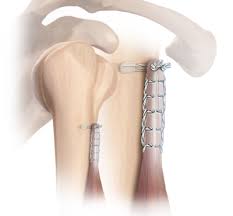

Biceps tenodesis is a surgery to repair the biceps tendon. This procedure can help if pain or an injury affects the biceps tendon in and around the shoulder.
In biceps tenodesis, a surgeon removes a damaged section of the biceps and reattaches the rest of the tendon to the bone of the upper arm. By removing the part that causes pain, this procedure can help restore function and relieve symptoms.
In this article, learn more about biceps tenodesis and its possible risks and complications.
When is biceps tenodesis used?
Guido Mieth/Getty Images
Biceps tenodesis is an option for treating shoulder pain that results from inflammation or tissue damage.
People who might benefit from this type of surgery include those with:
wear and tear to the tendon, for example, from aging
overuse or injury due to high-impact or contact sports and activities that involve repetitive motions
torn tissues in the biceps tendon
damage to the rotator cuff
Pain from the biceps tendon usually affects the front of the shoulder and the top of the humerus bone, which runs from the shoulder to the elbow.
The pain may radiate to other parts of the arm and back. There may also be cramping, tingling, swelling, and difficulty moving the shoulders or arm.
Pain can also stem from the top edge of the shoulder, where the upper arm bone fits into the joint. These injuries are known as superior labrum anterior and posterior (SLAP) tears and involve the cartilage around the shoulder joint. They can also involve the biceps tendon. Overuse, powerful pulling on the arm, falling on an outstretched arm, and other accidents can all cause SLAP tears.
Surgical procedure
The two main soft tissue techniques are:
Percutaneous intra-articular transtendon (PITT) technique: Surgeons use two needles to develop an interlocking pattern of sutures and then tie the tendon to a shoulder ligament.
In hardware fixation techniques, the surgeon first detaches the biceps tendon and then reattaches it to the bone.
There are two main hardware fixation techniques:
Recovery
Recovery from biceps tenodesis takes place in stages.
How long does recovery take?
Depending on the type of surgery a person has, they may need to use a sling and avoid using the joint for some time.
In the case of soft tissue surgery, the person will need to keep the joint immobilized and rested for 3–10 days. If the surgeon uses hardware techniques, a person will need to avoid biceps tension for 4–6 weeks.
Rehabilitation and physical therapy will begin 7–10 days after surgery and continue for several weeks. In these sessions, the person will gradually learn to:
protect the shoulder
activate the relevant muscles
increase their range of motion
A trained physical therapist will guide the person on returning to full movement and activity. Full rehabilitation may take up to 20 weeks.
In the later phases of recovery, the therapist may tailor treatment to help a person return to their individual sport.
In the first 4 weeks, the person will start to do cardiovascular exercise, such as walking or riding a stationary bike. Swimming, weight lifting, and throwing sports are the last activities to be reintroduced.
The exact recovery time will depend on:
the severity of the original injury
the presence of other injuries
a person’s age
a person’s health status before the injury
whether they follow a rehabilitation program
Exercises
A physical therapist will guide the exercises a person should do while recovering from this surgery. Here are some examples of activities they may suggest. However, a person should follow their physical therapist’s instructions, as doing certain exercises too soon or without guidance could result in injury.
In the days after surgery, a physical therapist may recommend:
hand squeezing exercises
moving the elbow and wrist with the arm in a neutral position by the side
shoulder shrugs
supported pendulum exercises
Next, a person may work with a physical therapist on the following exercises:
full pendulum exercises
exercises for the elbow and wrist, such as wall walks and using pulleys
finger isometrics, such as slowly forming a fist and then slowly uncurling the fingers
using a stationary bicycle while wearing a sling for support
In time, the physical therapist may add new exercises to the existing ones, such as:
rotator cuff strengthening exercises using a resistance band
resistive wrist and elbow exercises using a light dumbbell
wall pushups
using an elliptical trainer
walking or running in a pool
As recovery progresses, a person will continue the previous exercises with increased resistance, but they may also try:
doing activities to gradually increase range of motion
progressing from wall pushups to table pushups
tossing a light ball with the arm at their side
using a seated rowing machine with light weights
using a treadmill
doing resistance exercises in a pool
Next, the physical therapist may recommend:
tossing a ball overhead
doing weight training with light weights
progressing from table to chair pushups
As a person progresses toward full recovery, a physical therapist may suggest they try:
doing regular pushups
doing situps
swimming
running on a track
working with progressively heavier weights
transitioning to a program for home or gym use
The following slideshow illustrates some of the exercises listed above:
Success rate
Biceps tenodesis has a high success rate, and most people report less pain, better use of their shoulders, and a return to sports and activities after surgery.
Experts say biceps tenodesis is most likely to be effective if surgery happens within 3 months of the initial injury. However, some people report a positive outcome even if they wait longer than 3 months.
Complications
Complications after biceps tenodesis are uncommon. A 2020 review found that around 13.5%Trusted Source of people experienced complications after surgery.
These included:
ongoing pain
a need for further surgery
wound complications
nerve injury
Popeye deformity, which changes the appearance of the arm
Popeye deformity is named after the muscled cartoon character. A tendon that is injured, torn, or otherwise unattached from the shoulder joint can bunch up, creating a bulge along the arm that looks similar to one of Popeye’s muscles.
Alternative treatments
Before recommending surgery, a doctor will usually recommend treating biceps pain with conservative methods, such as:
resting the joint
applying ice packs, wrapped in a towel to prevent skin damage
undergoing physical therapy
using nonsteroidal anti-inflammatory drugs (NSAIDs), such as ibuprofen, to manage pain
receiving steroid injections to reduce inflammation, in some cases
If these treatments do not relieve pain and restore freedom of movement, a person may need surgery.
Tenodesis vs. tenotomy
If a person needs surgery, their doctor will explain the options. They may need to choose between biceps tenodesis and a procedure called a tenotomy. In a tenotomy, a surgeon cuts and releasesTrusted Source the tendon as close as possible to the shoulder joint.
People who undergo biceps tenodesis may have a higher risk of pain after surgery, but strength and endurance appear similar after both procedures.
Tenodesis vs. SLAP repair
Another option for biceps repair is SLAP repair. This is a less invasive option. It may be suitable for people with an injury called superior labral anterior-posterior (SLAP) tears. This injury affects the cartilage around the socket of the shoulder joint.

Comments: 0
Post a Comment